

Group Training · On-site option
What the CPR Go Kit is, and how it works
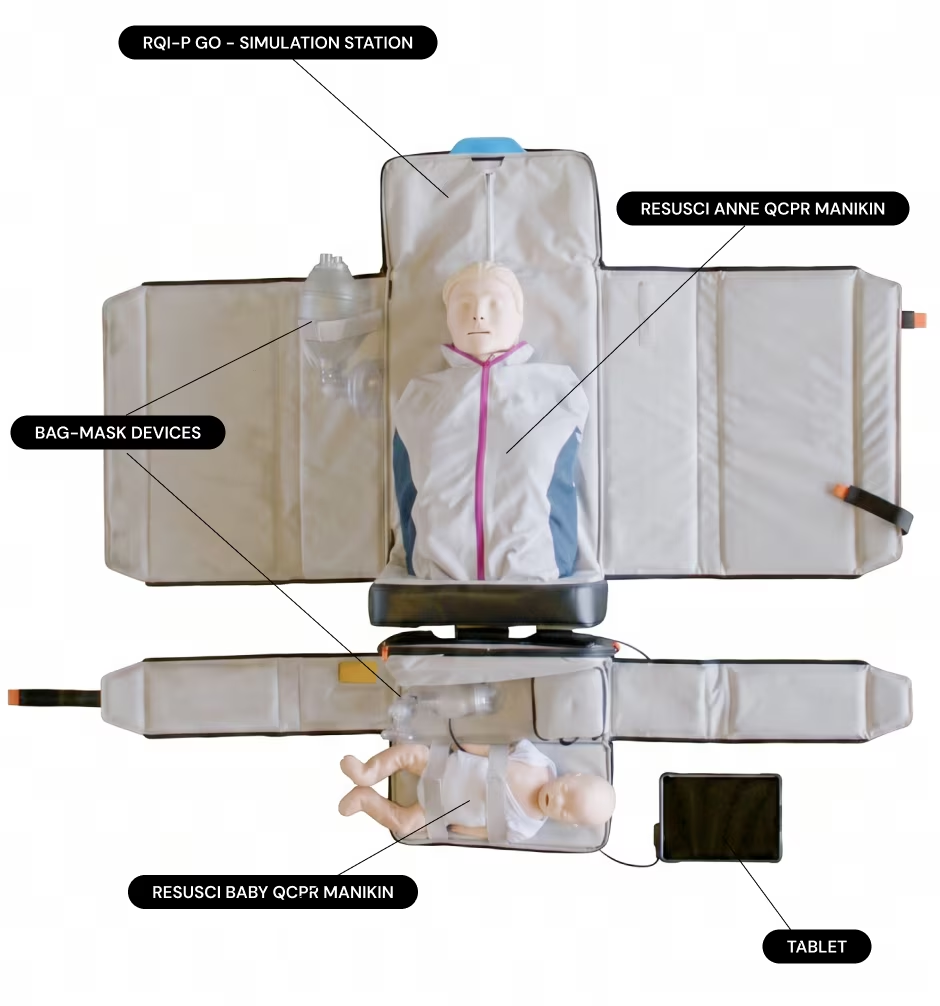
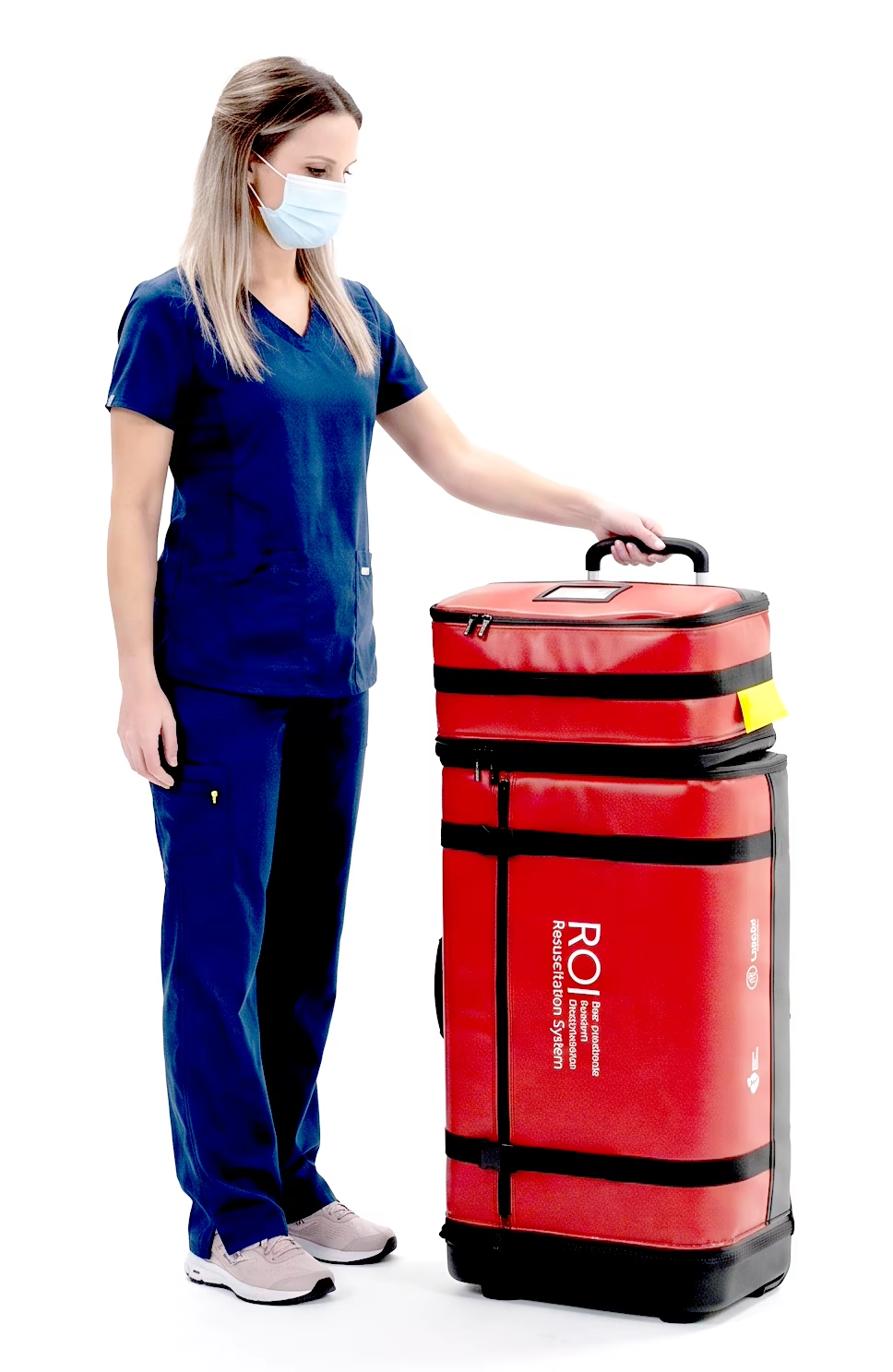
A complete, automated CPR skills station that folds into a wheeled case. We leave it at your facility for several days based on headcount, so each employee can complete an individual hands-on check-off when their schedule allows.
The short version.
The CPR Go Kit is a portable RQI simulation station — the same skills-verification equipment used inside hospitals, in a case that travels.
It's the separately purchased on-site option for Group Training, delivered at your facility for a minimum of 10 people.
The kit stays on site for several days based on headcount. Each employee comes through individually for a 20–30 minute hands-on skills check at a time that works for them.
It opens on a conference table, a break-room floor, a site trailer or a studio mat, and it only needs a standard power outlet. No projector, no room booking, no classroom.
Everything on it is a training manikin. Nothing on it is a medical device.
What's inside
| Component | What it's for |
|---|---|
| Adult manikin | Adult compressions and ventilation, in a padded tray with rigid side panels |
| Infant manikin | Infant compressions and choking relief, on its own fold-out panel |
| Bag-valve masks | Adult and infant ventilation practice |
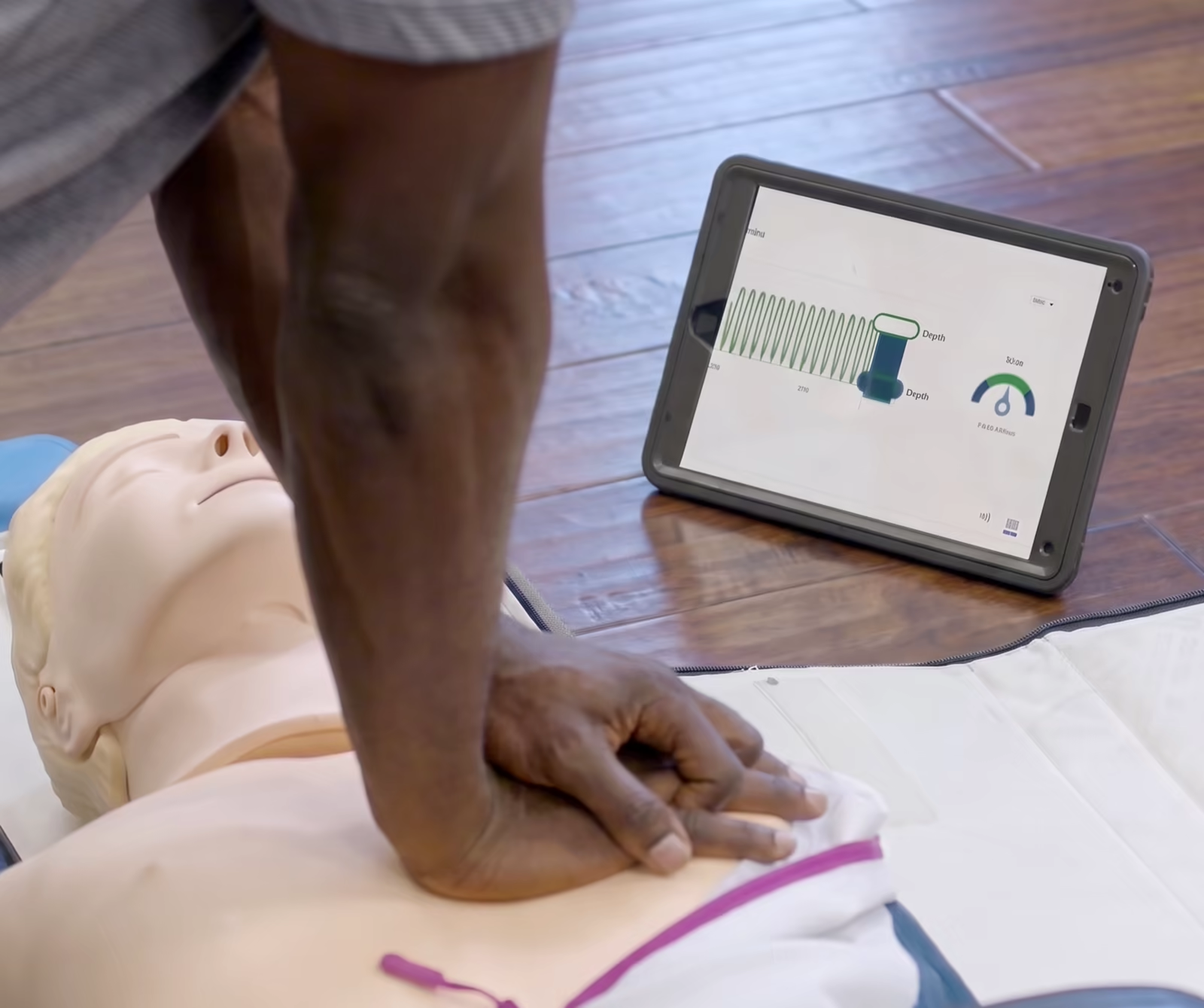
| Feedback tablet | Live compression rate and depth, shown while you work |
| Gray mat | Unfolds from the case; the working surface for floor sessions |
| Accessory pouch | Cables, one-way valves and consumables |
| Wheeled hard case | Everything above, packed to travel |
The infant manikin is the part most often skipped elsewhere. Centers serving infants and toddlers practice on equipment sized for infants, not on a smaller version of an adult.
How the on-site visit works
Your staff finish the coursework first.
Official AHA-aligned material, online, at their own pace, between shifts. Nothing about this part needs us in the room.
We bring the kit to you.
It stays at your facility for several days based on headcount. Clear floor or table space about the size of a conference table is enough.
Each person is checked off individually.
One at a time, typically 20 to 30 minutes for BLS. People choose a time during the visit, step away, get checked off, and go back to work — there's no group class and no whole team off the floor at once.
The eCard is issued on the spot.
Nationally recognized, in the person's own name, as soon as they pass.
Why the tablet matters
In a conventional class, "you passed" is one instructor's judgment of a room full of people.
On the CPR Go Kit, compression rate and depth are measured live while the person works. They see their own numbers. So do we.
That matters for two reasons that have nothing to do with paperwork. Compressions that are too shallow or too fast are among the most common failures in real resuscitation, and neither is visible to the naked eye. And a measured check-off leaves a per-person result rather than a note that a class happened in March.
This is what RQI — Resuscitation Quality Improvement — is built around: verifying competence with data instead of observation. RQI Partners is a joint venture of the American Heart Association and Laerdal Medical.
Where it can go
Anywhere with room to kneel beside a manikin. In practice that has meant conference rooms, clinic break rooms, unused exam rooms, warehouse break areas, site trailers, school multipurpose rooms, childcare staff rooms, gym studio floors and restaurant dining rooms before service.
For new hires or anyone who can't make the visit dates, your company can also buy a bulk license pack for use at any CPR Certification Labs office.
What it isn't
It isn't a medical device.
Each manikin and device in the CPR Go Kit is intended for training purposes only.
It isn't an online course.
AHA certification requires an in-person, hands-on skills demonstration in addition to the knowledge portion, which happens online. The CPR Go Kit is how the hands-on part happens without a classroom.
It isn't equipment we sell.
We bring it, leave it at your facility for the scheduled visit, and take it away afterward.
Frequently Asked Questions
A standard power outlet is required. The tablet uses its own Wi‑Fi or cellular connection, so it does not need your facility's network.
See it in your own building.
Tell us how many people you need certified and where. We'll bring the kit to you.