
The three courses compared
BLS
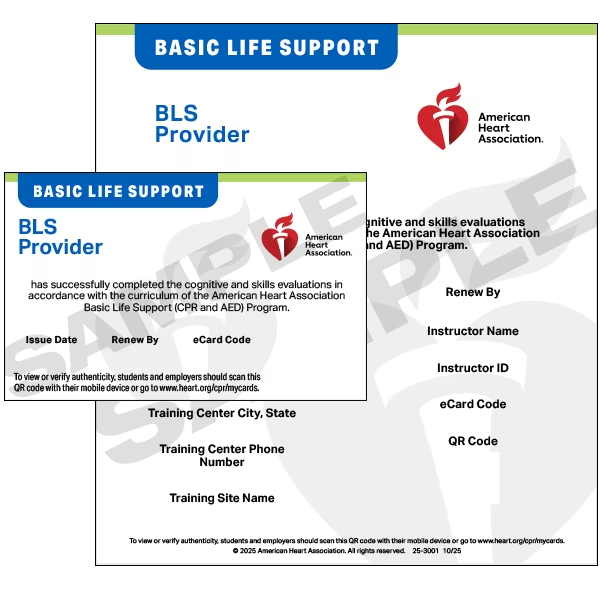
BLS Provider
Adult, child and infant CPR, AED use, choking relief
Who: Clinical and healthcare staff, and teams that need CPR and AED skills.
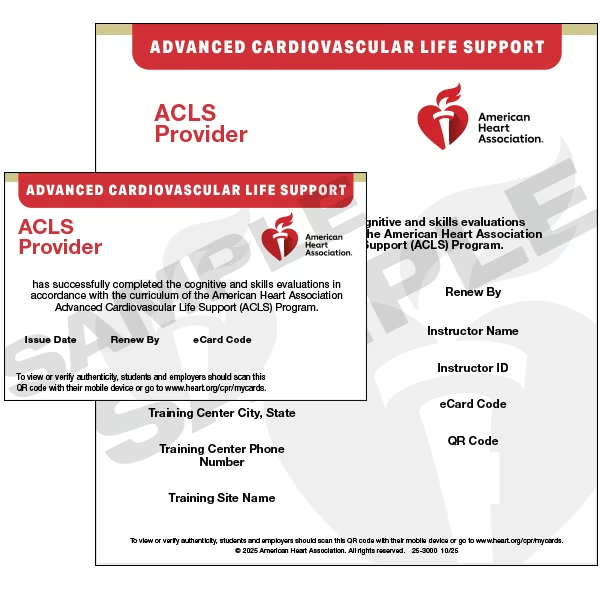
ACLS
ACLS
Cardiac emergencies beyond basic life support
Who: ED and ICU nurses, hospitalists, anesthesia, rapid response teams.
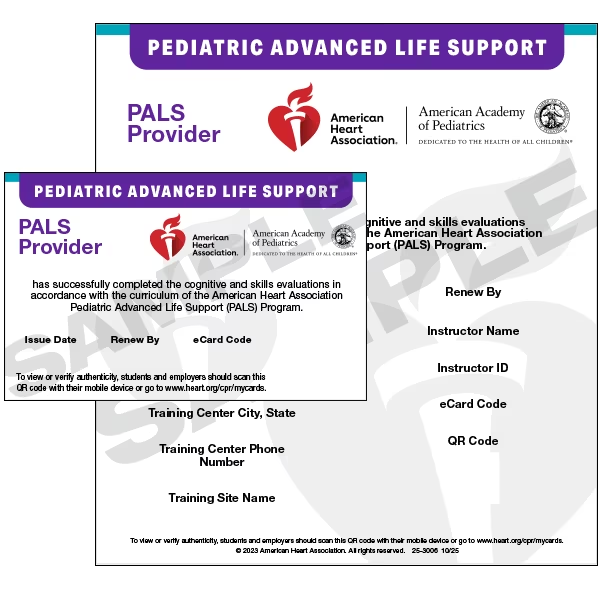
PALS
PALS
Pediatric advanced life support
Who: Pediatric, ED and urgent care staff.
One group can mix courses. ACLS and PALS are priced separately. We don't currently offer First Aid, and BLS does not satisfy a separate first-aid requirement.
How blended learning works
Online coursework (HeartCode)
Official AHA-aligned material, self-paced, roughly 1–3 hours depending on the course. It must be finished before booking the skills session.
In-person skills check
Typically 20–30 minutes for BLS; ACLS and PALS take longer but fit within the one-hour session. BLS, ACLS and PALS can be checked in one combined session at our training centers.
Measured, not eyeballed
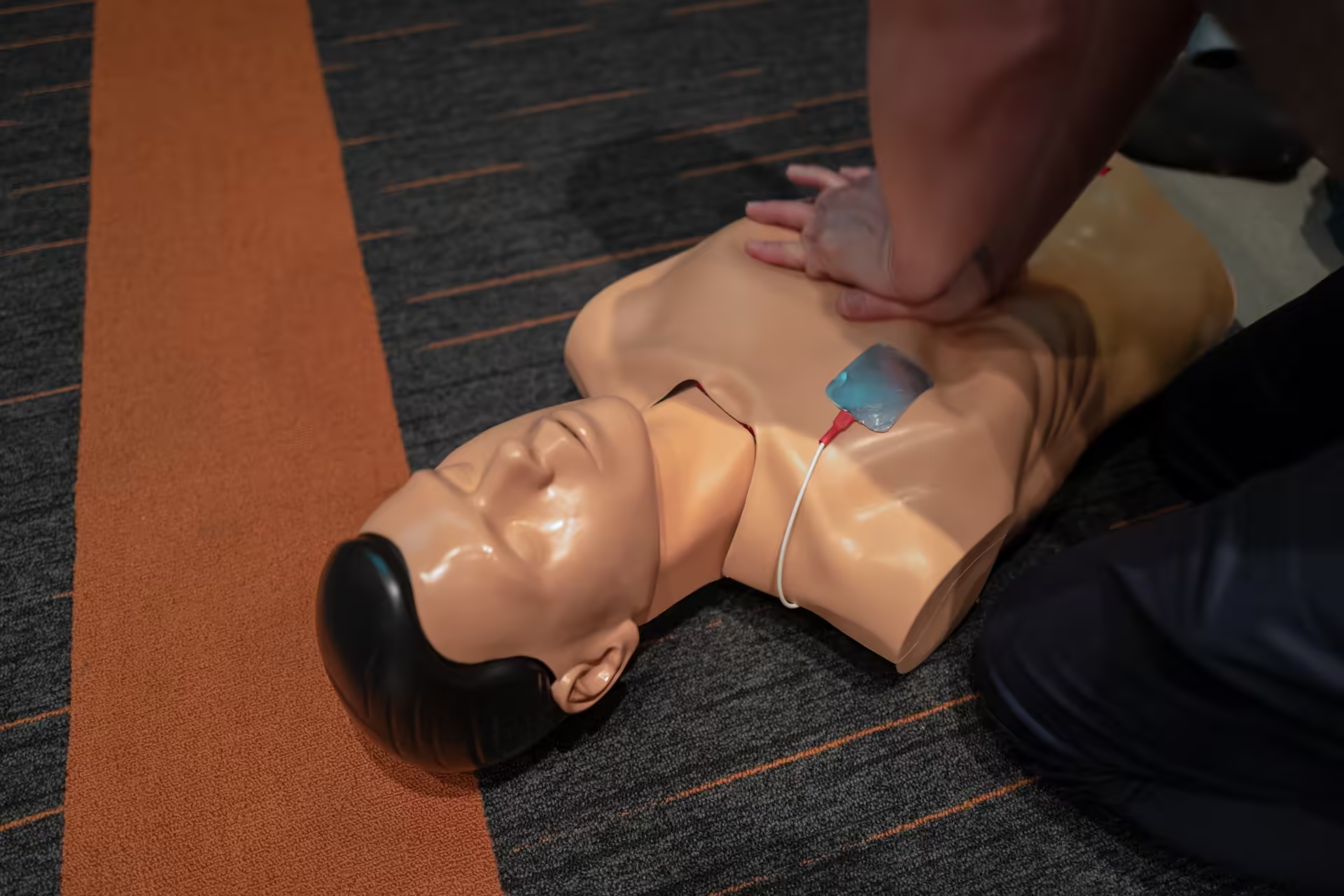
Feedback-enabled manikins measure compression rate and depth live with RQI technology. RQI Partners is a joint venture of the American Heart Association and Laerdal Medical.
Is blended accepted like a classroom course?
Yes. Completing both parts produces the same nationally recognized AHA eCard as a fully classroom-based course.
Can you get certified entirely online?
No. AHA certification requires an in-person, hands-on skills demonstration. A provider selling a "certification" with no in-person skills component is not issuing an AHA card.
The AHA eCard
What it is: The American Heart Association's digital course completion card, issued to the individual with name, course level and issue date. It replaced paper cards.
Valid for: Two years, through the end of the month it was issued.
How to claim it: Go to ecards.heart.org/student/myecards and search with first name, last name and email (or the eCard code), follow the invitation email, or text "eCard" to 51736 if your phone number was entered at the session.
How employers verify it: The Employer tab on the same site, using the eCard code. The employee must claim the card first, or the lookup finds nothing.
How fast it arrives: The AHA requires Training Centers to issue cards within 20 business days; we issue yours as soon as you pass your skills check.
Who owns it: The employee, not the employer who paid for it.
Lost card: Look it up again on the same page and download it.
Frequently asked questions
ACLS is for staff who manage cardiac emergencies beyond basic life support — ED and ICU nurses, hospitalists, anesthesia, rapid response teams. PALS is the pediatric equivalent, for pediatric, ED and urgent care staff. Both sit on top of BLS rather than replacing it.